Welcome to our journey through masculinity in early years education, an exploration that invites us to reconsider traditional gender roles within one of the most nurturing professions out there. Imagine sitting down with a friend, sipping on your favourite tea, delving into the heart of what it means to be a male educator in a field often perceived as female territory. It’s about challenging norms, embracing empathy, and, most importantly, shaping the minds of our youngest learners.
In the UK, the early years education landscape is vibrant and ever-evolving. Yet, it remains an area where men like Karl Eaveson, whom we’ll introduce to you shortly, are pioneering change and redefining what it means to nurture and educate. Karl’s journey from an electrician to a male deputy manager in a nursery is not just inspiring; it’s a testament to the shifting perceptions of masculinity in this vital sector.
As we dive into this conversation, we invite you to keep an open mind and heart. Whether you’re contemplating a career in early years education or simply curious about the evolving role of masculinity within it, we’re here to share insights, stories, and a bit of guidance along the way. Let’s get started.

Imagine, if you will, a young lad fresh out of school, embarking on a path well-trodden by those before him. For Karl, this meant training as an electrician – a choice influenced more by societal expectations and the allure of a ‘masculine’ profession than by his own passions. “I always liked the idea of working with children/young people,” Karl shares, reminiscing about his initial divergence from his true calling. Yet, the pull towards a more traditional male role was strong, a nod to the pressures many young men face when making career choices.
However, Karl’s journey took a significant turn when he realised that happiness and fulfillment eluded him in the electrical trade. This realisation sparked a period of introspection and exploration, eventually leading him to a two-day induction to childcare course with North Yorkshire Council. “This was more ‘me'”, he admits, reflecting on the pivotal moment that redirected his career trajectory towards early years education.
Transitioning from an electrician to an early childhood educator wasn’t just a career shift; it was a profound transformation that challenged the very essence of societal norms about masculinity and caregiving. Karl’s move into childcare was met with its share of raised eyebrows and unspoken questions, underscoring the deep-seated gender stereotypes that define what roles are deemed suitable for men and women.
Yet, it was in this nurturing environment that Karl found his calling, eventually becoming a male deputy manager and an indispensable part of the early years education landscape. “By the time I was 18 and very unhappy with my previous jobs, I embarked on a new journey… eventually leading to full-time employment in an out-of-school club,” he recounts. This wasn’t just a job change; it was a leap into a world where Karl could make a genuine difference, one child at a time.
Through his story, Karl illuminates a crucial message: that passion and purpose should define our career choices, not outdated notions of gender roles. His transition from the trades to teaching is a beacon for others, encouraging us to pursue careers that resonate with our true selves, regardless of societal expectations.

Stepping into the world of early years education as a man, Karl encountered a landscape rife with preconceived notions about what it means to be a male educator in a traditionally female-dominated field. His journey sheds light on the reactions from parents and society, the misconceptions and biases he faced, and the gradual evolution of societal attitudes towards men in caregiving roles.
“One of the first contact points for a perspective family,” Karl explains, “they arrive and get introduced to the Male Deputy Manager.” The initial reactions were often ones of surprise and curiosity. Parents would express their astonishment, pleasantly or otherwise, at finding a man in such a pivotal role within early years education. This, Karl notes, opened the door to discussions right from the start, challenging the traditional expectations many held about who should be caring for and educating their children.
Despite the positive interactions, Karl’s career has not been devoid of challenges. “Yes, I have been labelled, called names etc., in a variety of different scenarios over the years,” he shares candidly. From being unjustly blamed for a child’s harmless choice of dress-up clothes to facing outright requests from parents that he not interact with their children due to his gender – Karl has navigated a minefield of biases.
But Karl’s resilience shines through as he talks about the shift in handling these biases. “In the early stages of my career, we used to just agree…but now we are at the point of having open discussions around this.” This change in approach not only protects male practitioners but also champions the notion that men are equally capable and qualified to provide care and education.
Over the years, Karl has observed a significant shift in the way society views masculinity within the realm of early years education. The dialogue around men in childcare has grown louder and more inclusive, moving away from the sidelines and into the mainstream. “I was starting to hear rumblings of discussion in this area…this conversation just seemed to get louder as time went on,” Karl reflects on the evolution of societal attitudes.
This shift is also evident in the increased networking opportunities and focus groups dedicated to discussing and promoting the role of men in early years education. It signals a broader societal change towards recognising and valuing the unique contributions men can make in these roles.
Karl’s experiences underscore a crucial point: challenging stereotypes is not just about overcoming biases; it’s about engaging in conversations that foster understanding and appreciation for diversity in caregiving roles. As societal attitudes continue to evolve, the path Karl has paved serves as a beacon for future male educators, illuminating the importance of inclusivity and the breaking down of gender barriers in early years education.

In the tapestry of early years education, each educator brings their own unique colours to the weave. For male educators, their presence in this traditionally female-dominated field adds a rich diversity of role models for children, showcasing an inclusive range of emotional expression and approaches to care that challenge and enrich the standard fabric of early learning environments.
Karl, reflecting on his role, underscores the importance of having male figures in early years settings. “No matter what circumstances come after birth, children are born to two parents. Males actively being present in settings reinforces the male carer role that not every child experiences at home,” he says. This diversity in role models is crucial. It provides children with a broader understanding of who can provide care, guidance, and support, breaking down gendered expectations from an early age.
In a world where family dynamics are as varied as the individuals within them, having male educators like Karl ensures that children see reflections of their own lives in their caregivers and teachers. It sends a powerful message: care and education are not confined to one gender; they are human qualities that everyone can embody.
One of the most profound impacts male educators can have in early years education is in their approach to emotions, sensitivity, and empathy. Karl shares his philosophy, “I firmly believe in an open approach that actively encourages children to think about how their actions make others feel.” This method aligns perfectly with fostering an environment where children learn to be empathetic, considerate, and understanding from a young age.
Karl’s emphasis on encouraging emotional expression and sensitivity in children, regardless of gender, plays a vital role in challenging the stereotype that men are less inclined towards emotional openness. By demonstrating empathy and understanding, male educators like Karl are helping to shape a generation of children who are comfortable expressing their feelings and who understand the importance of caring for others.
Karl’s narrative also touches on an essential point: the impact of gender on teaching styles is less about the differences between how men and women teach and more about the richness of diversity they bring to the table. His gender, he notes, “just reinforces for me that males can be empathetic too and have a gentle, caring side.” It’s a testament to the idea that empathy, sensitivity, and emotional intelligence are human traits, transcending gender norms and stereotypes.
The unique contributions of male educators in early years education are invaluable. They provide diverse role models, offer varied perspectives on care and education, and help dismantle outdated notions of gender roles. As society continues to evolve, the presence of educators like Karl ensures that the next generation will embrace a more inclusive, understanding, and empathetic worldview.
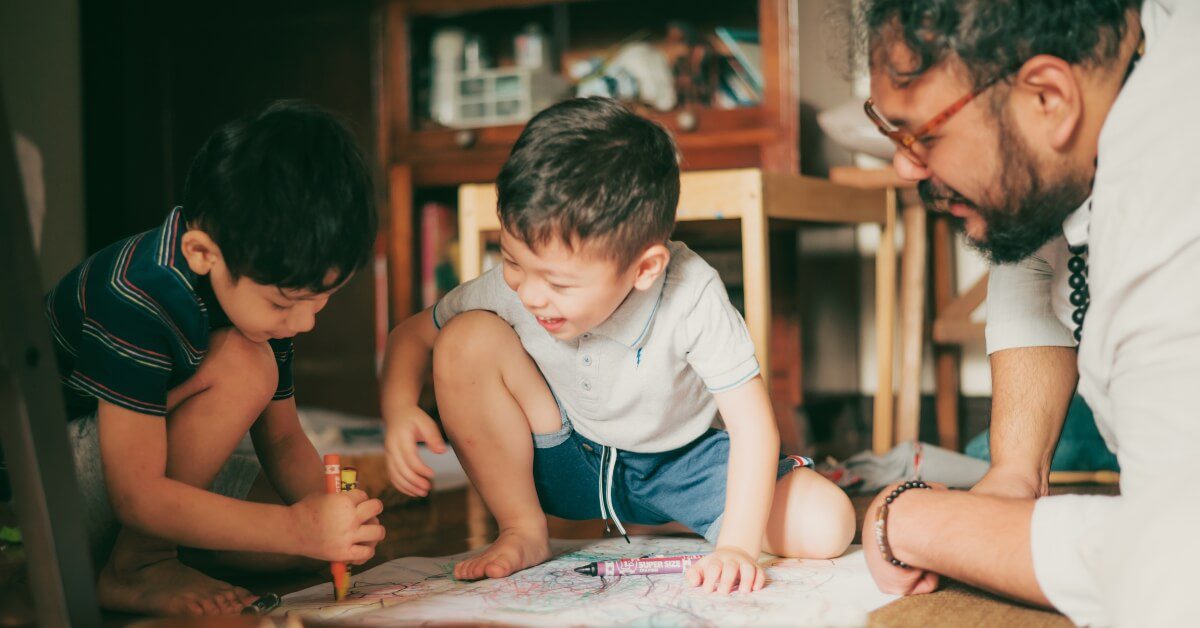
The presence of male educators in early years education doesn’t just enrich the learning environment; it has a profound influence on children’s understanding of gender roles and carries the potential to shape societal norms in the long term. Karl’s experiences and insights offer a window into how these dynamics are playing out in real-time, revealing the transformative power of male involvement in early childhood education.
From the moment they step into the classroom, children are keen observers, soaking up not just academic lessons but social cues and norms. Karl, in his role as a male deputy manager, becomes a living lesson in breaking down gender stereotypes. “During my time doing outreach work, we looked at stereotypes a fair bit, and I was keen to reinforce that all job roles can be filled by either gender,” Karl shares, highlighting his active role in challenging traditional narratives about who can be a caregiver or educator.
This direct involvement provides children with tangible examples that both men and women can nurture, teach, and care, thereby broadening their horizons and encouraging them to think beyond societal constraints. It’s about showing, not just telling, that passions and professions need not be dictated by gender.
The ripple effects of having male figures like Karl in early years settings extend far beyond the classroom walls. By normalising the presence of men in caregiving and educational roles from an early age, we’re laying the groundwork for a future that values and encourages emotional intelligence, sensitivity, and caring qualities in everyone, regardless of gender.
Karl’s vision and daily practice contribute to a slow but steady shift in societal attitudes towards gender roles. As children grow up with these inclusive models, they carry forward a more flexible and open-minded approach to gender and career paths. “Having male role models in childcare is great but also having female role models in the fire service, in engineering, or in sport is just as important,” Karl points out, underlining the need for a balanced representation across all sectors.
This evolving perspective is crucial for building a society where career choices are guided by interest and aptitude rather than gender stereotypes. It promises a future where the next generation can pursue their passions unencumbered by outdated notions of masculinity and femininity.

In the journey towards a more inclusive early years education sector, male educators like Karl have navigated a landscape dotted with gender-based obstacles. These challenges range from societal skepticism to institutional biases, yet they are being met with resilience and a clear vision for the future. Karl’s experiences not only highlight the hurdles but also illuminate the path forward, offering insights into how the profession can evolve.
Karl candidly shares instances where his gender led to direct challenges in his professional role. “I have had requests made to my setting that I have no contact with certain children due to being male,” he recounts, revealing the stark prejudices still at play. These experiences are emblematic of the broader gender-based obstacles that male educators encounter, from unwarranted suspicion to outright exclusion.
However, Karl’s response to these challenges has been one of constructive engagement and advocacy for change. “Now we are at the point of having open discussions around this,” he says, highlighting a shift towards addressing biases head-on. This approach not only champions the value male educators bring to early years settings but also contributes to a broader cultural shift, acknowledging that quality care and education know no gender.
Looking ahead, Karl envisions a future for early years education where gender no longer dictates one’s role or opportunities within the field. He advocates for systemic changes to support this evolution, such as enhanced paternity leave policies that acknowledge men’s caregiving roles. “Both genders have lots to offer, and the current system just reinforces the masculine, breadwinner mentality,” Karl argues, pointing to the need for societal and policy shifts that support men in caregiving roles.
Karl’s vision extends beyond policy changes; it encompasses a cultural shift towards recognising and valuing the diverse contributions of all educators, regardless of gender. By fostering an environment where male and female educators are equally embraced, the early years education sector can become a model of inclusivity and diversity, reflecting the full spectrum of human experience and capabilities.
The obstacles Karl has faced and continues to confront are not just personal battles; they are part of a larger struggle towards a more inclusive and equitable society. His resilience and forward-looking perspective serve as a beacon for other men considering a career in early years education, reassuring them that while challenges exist, the path to overcoming them is being cleared.
As we look to the future, Karl’s story encourages us to imagine an early years education sector where diversity is not just accepted but celebrated. A future where every child can see themselves reflected in their educators, and where every educator can pursue their passion without the barriers of gender-based stereotypes.

Navigating a career in early years education as a man can come with its unique set of challenges, but it also brings unparalleled rewards. Karl, with his wealth of experience and insights, offers advice to those considering this path and highlights the importance of support networks in fostering a fulfilling career.
“If you’re thinking about a career in early years education, do it,” Karl urges. His encouragement is straightforward yet powerful, underpinned by years of experience in a role that, despite its challenges, has been incredibly rewarding. “It’s not the highest paid, it’s hard work, and long hours; but for me, the reward outweighs all of that,” he shares, emphasising the deep sense of fulfillment that comes from nurturing and witnessing the growth of young minds.
Karl’s journey underscores the importance of following one’s passion, even when it leads down a less conventional path. He advises those on the fence to look beyond societal expectations and consider the impact they can have on the lives of children. “Being witness to so many magical moments, spending your days supporting a child’s development with every activity, that’s it for me. It hits different to any job I’ve ever done,” Karl reflects, encapsulating the essence of what makes a career in early years education so special.
One of the critical factors in Karl’s success and resilience has been the support network he’s found within the early years education community. “I firmly believe offers a better opportunity for males starting in our industry now than was available to me in the early 2010s,” he says, acknowledging the progress made in building communities where male educators can share experiences, challenges, and triumphs.
Karl highlights the value of engaging with focus groups, online forums, and professional networks dedicated to supporting men in childcare. These resources not only provide a sense of belonging but also serve as vital platforms for advocacy, education, and mutual support. For Karl and many others, these networks have been instrumental in navigating the profession’s complexities and championing the cause of masculinity in early years education.
To those considering a leap into early years education, Karl’s story serves as both inspiration and testament to the transformative power of pursuing one’s passion. His advice encourages us to challenge societal norms, embrace the joys of teaching and caregiving, and find strength in community. As we move forward, let’s carry Karl’s message of encouragement and empowerment, ensuring that the next generation of educators can thrive in a more inclusive and supportive environment.

As we stand at the crossroads of change in early years education, it’s crucial to look ahead and contemplate the systemic shifts and societal support needed to foster gender diversity in caregiving roles. Karl’s journey and insights offer a valuable perspective on the path forward, emphasising the need for a collaborative effort to redefine masculinity in early years education.
For the early years education sector to truly embrace and benefit from gender diversity, systemic changes are paramount. Karl advocates for a more equitable approach to policies such as paternity leave, which currently reflect and reinforce outdated gender roles. “Things such as paternity leave allowance, for example, still paint females as the main carer, and I think this needs to change,” he points out.
Furthermore, professional development opportunities should be made equally accessible to all educators, regardless of gender, ensuring that male educators can advance in their careers without facing discrimination or bias. By addressing these systemic barriers, we can create a more inclusive environment that not only attracts but also retains male talent in the early years education sector.
The journey towards a more gender-diverse caregiving landscape extends beyond policy changes; it requires a shift in societal attitudes and perceptions. Society plays a critical role in either perpetuating stereotypes or fostering an environment where individuals are free to pursue their passions without the constraints of traditional gender roles.
Public awareness campaigns, educational initiatives, and community support can all contribute to a broader understanding and acceptance of men in caregiving roles. Highlighting success stories, like Karl’s, and the positive impact male educators have on children’s development can help challenge and change outdated perceptions.
Envisioning the future of masculinity in early years education, we see a sector that values diversity, embraces inclusivity, and recognises the unique contributions of all educators. In this future, children benefit from a range of role models who teach them that empathy, care, and education are not bound by gender.
Karl’s aspirations for the sector echo a sentiment that many share: a desire for a world where the next generation of educators – regardless of gender – feels supported, valued, and inspired to make a difference. By working together, we can dismantle the barriers that have historically limited gender diversity in caregiving roles and build a future that celebrates and benefits from the richness of human experience.
Are you inspired to be part of this transformative journey? Whether you’re considering a career in early years education, looking for support as a male educator, or simply wish to learn more about promoting gender diversity in caregiving roles, we’re here to help. Discover our range of services, from resources for employers and jobseekers, to a curated job board and a rich selection of articles, designed to support and empower educators in creating inclusive learning environments. Take the next step towards making a difference in the lives of our youngest learners today!