Ever thought about the magic that happens behind the scenes in educational settings, where little minds flourish and young hearts dream? That magic, in large part, is crafted through diligent supervision. Whether you’re already an educator or contemplating dipping your toes into the world of teaching, understanding the role of supervision is crucial.
Supervising activities isn’t just about keeping an eye out; it’s the art of nurturing, guiding, and ensuring safety. In the dynamic environment of schools and nurseries, where children of all ages come together, it’s the backbone that maintains order, ensures safety, and facilitates learning. It’s akin to a maestro conducting an orchestra, ensuring every instrument plays in harmony.
Before we delve deeper, let’s take a quick journey across the educational landscape of the UK. Picture this: tiny tots in nurseries learning their first words, spirited children in primary schools exploring the world of numbers and stories, and teenagers in secondary schools navigating the complexities of life and academia. Each stage, from the Early Years Foundation Stage (EYFS) to the challenges of Sixth Form or College, brings its unique rhythm and needs.
Ready to explore this intricate dance of supervision in the UK‘s educational tapestry? Let’s embark on this enlightening journey together!

Supervising Activities in the Early Years Foundation Stage (EYFS)
Babies (age 0 to 1): Nurturing the Tiniest Learners
Let’s zoom in on the most delicate and precious age group: babies. Imagine being thrust into a world bursting with unfamiliar sights, sounds, and sensations. Overwhelming, right? For these little souls aged 0 to 1, every day is a voyage of discovery.
- Basic Needs: The first thing to remember is that these tiny explorers have very fundamental needs. Much of their day revolves around feeding, changing, and, of course, those ever-important naps. Think of them as little rechargeable batteries; when their energy depletes, it’s time for a top-up, usually in the form of a milk bottle or a comforting embrace. Keeping a rhythmic schedule that caters to these needs is paramount. But hey, don’t we all cherish a good afternoon nap?
- Sensory Activities: At this age, the world is a sensory playground. Soft toys that squeak, gentle lullabies, and the soothing hum of a nursery rhyme can be an absolute delight. It’s all about stimulating their developing senses. Remember your first teddy bear or the melody that lulled you to sleep? It’s these simple pleasures that form the earliest memories for many.
- Mobility: Now, this is where things get really exciting (and, perhaps, a tad exhausting for the supervising adult!). As babies inch towards their first year, mobility becomes a big theme. Crawl spaces become arenas of adventure, and tummy time turns into a muscle-building exercise. And guess what? The first few tentative steps aren’t too far away!
- Safety Considerations: With mobility comes the need for vigilance. We’re talking soft surfaces to cushion those inevitable tumbles and non-toxic materials for when, inevitably, everything becomes a chew toy. As they say, safety first!
- Adult-to-Child Ratio Considerations: Here’s a golden nugget of wisdom for anyone in the education sector: with babies, it’s all hands-on deck! In the UK, the stipulated adult-to-child ratio for babies is 1:3. This means for every three babies, there must be one adult present to supervise. One can’t put a price on the peace of mind that comes from knowing each baby receives ample attention and care.
As we journey through the world of teaching and supervising, babies remind us of the sheer wonder of life’s beginnings. Their wide-eyed curiosity and infectious giggles are treasures to behold. And trust us, there’s no feeling quite like witnessing their ‘firsts’ – be it a word, a step, or a melody hummed.
Wobblers (age 1 to 2): Discovering the World, One Wobble at a Time
Moving on from babies, we enter a delightful and, dare we say, wobbly phase. Picture little ones who’ve just discovered the thrill of standing on their two feet, albeit with a bit of a wobble. Ah, the wide world of wobblers!
- Physical Activities: Have you ever watched a toddler take their first independent steps? It’s a mixture of pure elation and heart-stopping fear, both for them and the adults watching! At this stage, soft play areas become their kingdom. These spaces, filled with cushioned obstacles and fun challenges, offer a safe haven for these newfound walkers to hone their skills without the fear of the occasional tumble.
- Simple Play: Remember when the simplest things brought immense joy? For wobblers, playtime revolves around uncomplicated yet enriching toys. Building blocks pave the way for budding architects, while water play not only cools them down on a warm day but also teaches basic properties of liquids. Who knew splashing could be so educational?
- Basic Arts: Time to get those tiny hands messy! Introducing wobblers to the world of art is an absolute treat. Give them some non-toxic crayons and watch as they scribble away with glee. And then, there’s playdough – the malleable mate that helps improve hand strength and sparks creativity. Though, a gentle reminder: always under watchful eyes, lest the colourful dough becomes a snack!
- Safety Considerations: As wobblers venture out, safety takes centre stage. Toys need to be free from choking hazards, and furniture within their reach should be stable. Nobody wants an adventurous climber meeting a wobbly table!
- Social Interactions: Ah, the age of parallel play. If you’ve ever seen two toddlers playing ‘together’ but not quite interacting, you’ve witnessed this phenomenon. It’s like being in your own bubble yet alongside someone else’s. Gradually, they also start understanding the concept of sharing – though it might be accompanied by the occasional teary-eyed dispute. But, hey, that’s growth!
Navigating the world of wobblers is a dance of joy, discovery, and learning – both for them and us. These little explorers teach us the beauty of simplicity and the thrill of newfound independence. And if you’re guiding them along this journey, we promise, the wobbles, giggles, and baby babble will make every moment worth it!
Toddlers (age 2 to 3): Curiosity in Overdrive
Welcome to the terrific twos! Gone are the wobbly steps. Now, we’ve got confident little adventurers on our hands, each brimming with curiosity and an ever-growing desire to explore and understand their surroundings.
- Structured Play: This age sees a gradual shift from random play to more structured activities. Puzzles become an introduction to problem-solving, challenging these young minds to fit the pieces together. And then there’s role-playing, where a cardboard box transforms into a spaceship or a castle, launching countless imaginative adventures. Ah, the boundless creativity of a toddler’s mind!
- Motor Skills: On the physical front, playground activities become an absolute hit. Climbing frames? A chance to scale Mount Everest! Swings? The perfect opportunity to touch the sky. These activities not only enhance their gross motor skills but also instill a sense of achievement and confidence.
- Early Literacy: “Once upon a time…” – arguably the most magical phrase in the English language. Storytime transports these tots to fantastical worlds, seeding a love for tales and sparking their imaginations. Songs, with their repetitive and catchy tunes, aid in memory development and introduce them to the rhythms of language.
- Safety Considerations: With newfound independence comes the increased need for watchfulness. Close supervision is the order of the day, ensuring that their brave endeavours remain safe. The play equipment, whether at home or in the nursery, needs rigorous checks to ensure they’re secure and hazard-free.
- Social Skills: It’s here that the building blocks of lifelong friendships are laid. Group activities foster teamwork, while circle time – where toddlers gather for stories or songs – emphasises listening and taking turns. Little arguments over toys evolve into learning experiences, teaching these munchkins the core values of sharing and empathy.
Entering the realm of toddlers is akin to embarking on an expedition, where every day unfurls new discoveries, boundless energy, and oodles of laughter. And, if you’re in the driver’s seat of this expedition, guiding and nurturing, trust us, you’re in for a ride filled with heartwarming moments and invaluable lessons from these pint-sized philosophers!
Pre-School/Reception (age 3 to 5): Laying the Foundations of Formal Learning
As we inch closer to the formal school environment, the preschool and reception years play a pivotal role. No longer are they the tiny tots taking their first steps; they’ve blossomed into young children, eager to soak up knowledge and set forth on the path of structured learning.
- Academics: The beginning of formal education is peppered with the joys of basic counting and the enchantment of phonics. ‘A’ isn’t just a letter now; it’s the sound of apples and ants. Numbers evolve from mere symbols to representations of quantity. Remember the pride of counting to ten for the first time? For these children, it’s a huge milestone.
- Creative Arts: Unleash the paints and let their imaginations run wild! At this stage, painting isn’t just about colouring within lines; it’s an expression of their emotions, stories, and dreams. Crafts introduce them to the wonders of creation, transforming paper, glue, and sequins into masterpieces worthy of the fridge door gallery.
- Physical Activities: Structure begins to seep into playtime as well. Dance becomes more than just random flailing to tunes; it’s choreographed movements that boost coordination. Structured play sessions encourage teamwork and the importance of rules, turning play into meaningful physical education.
- Safety Considerations: Now, this age group is a fascinating blend of growing independence peppered with the need for boundaries. They’re encouraged to explore, but within set limits, ensuring their environment remains secure yet stimulating. It’s like giving them wings, but reminding them of the nest’s safety.
- Cognitive Development: These young minds are like sponges, and it’s prime time for cognitive growth. Problem-solving tasks challenge their thinking, while memory games sharpen their recall skills. Ever played ‘I packed my bag’ and marvelled at how they remember the ever-growing list? Cognitive marvels, believe us!
Journeying through the pre-school and reception phase, we witness the beautiful intersection of play and structured learning. It’s a delicate dance, setting the tone for the many years of education ahead. And if you’re orchestrating this dance, know that you’re crafting the foundation of a lifelong love for learning. The chalkboard adventures, story corners, and little triumphs – it’s a symphony of growth and discovery.
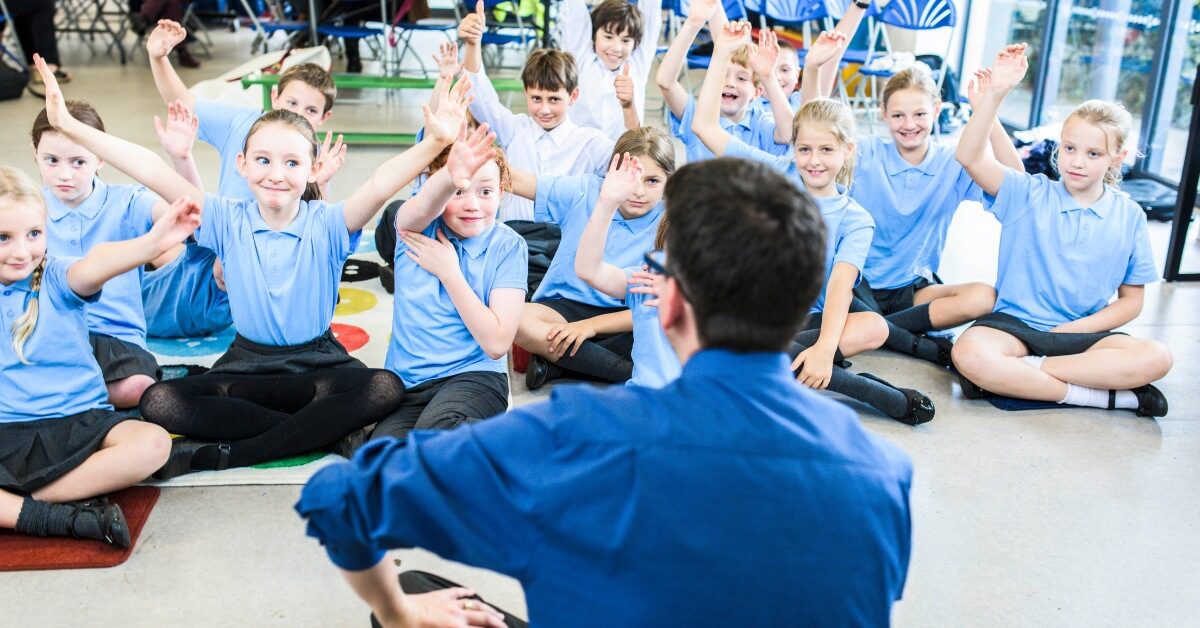
Supervising Activities in Primary Education
Key Stage 1 (Years 1 to 2; ages 5 to 7): Embarking on Structured Learning Adventures
As we steer away from the gentle shores of pre-school and reception, the vast ocean of Key Stage 1 beckons. Here, the waters are deeper, the lessons more structured, but the spirit of exploration and discovery remains as vibrant as ever.
- Academics: The heart of Key Stage 1 lies in the core subjects of Maths, English, and Science. It’s a beautiful phase – numbers take on deeper meanings, words weave into structured sentences, and the world around is a vast laboratory waiting to be explored. Multiplication tables become rhythmic chants, stories turn into springboards for imaginative writing, and the mysteries of plants, animals, and everyday phenomena pique scientific curiosity.
- Extracurriculars: While the core subjects might be the spine of Key Stage 1, the soul rests in the extracurriculars. An introduction to music might be the first step towards finding one’s melody in the world. A simple tune on a recorder, or the rhythm of a tambourine, could lay the foundation for a lifelong passion. Meanwhile, arts continue to flourish as children are introduced to more techniques, materials, and the histories of great artists.
- Safety: As children tread deeper waters, safety measures must evolve. Physical spaces like classrooms, playgrounds, and communal areas need vigilant monitoring. And in this digital age, even at this tender age, basic online safety becomes paramount. Lessons about not sharing personal information and the importance of trusted adult supervision when navigating the internet are crucial.
- Emotional Development: Ever witnessed a 6-year-old grappling with the complex world of feelings? Key Stage 1 is where the seeds of emotional intelligence are sown. Understanding their own emotions, recognising them in others, and initiating the journey of conflict resolution are skills that begin here. Simple disagreements over shared toys or favourite reading spots evolve into lessons on empathy, patience, and communication.
Stepping into Key Stage 1 is like boarding a ship set to sail through the vast seas of structured learning. The horizons are broader, the subjects more intricate, but the captain – be it a teacher, guardian, or mentor – ensures that the voyage remains one of excitement, growth, and endless discovery.
Key Stage 2 (Years 3 to 6; ages 7 to 11): Navigating the Middle Waters of Primary Education
Welcome to Key Stage 2, a pivotal phase where the wonders of early primary learning start moulding into a more detailed exploration of subjects. It’s akin to moving from dipping toes in the waters to full-fledged swimming – with the right guidance and encouragement, of course!
- Academics: The academic rigour is turned up a notch in Key Stage 2. Subjects aren’t merely touched upon; they’re delved into. Mathematics branches out into more complex problems and formulas. English takes on the hues of literature appreciation, poetry analysis, and more sophisticated writing projects. Science? Oh, it’s a world of experiments, exploration, and ‘eureka!’ moments.
- Extracurriculars: If Key Stage 1 was about introduction, Key Stage 2 is about immersion. Club participation offers an avenue for students to hone their passions, be it in drama, chess, or robotics. Team sports emphasise the essence of camaraderie, teamwork, and healthy competition. Who knows, the football drills or the choir rehearsals might be where lifelong memories are forged.
- Cognitive Skills: Now, this is where the brain gymnasium truly kicks into high gear. Critical thinking isn’t just a fancy term; it’s practised. Children are encouraged to question, analyse, and reason. Small research projects foster independent study skills, giving them a taste of seeking out knowledge, not just consuming it.
- Safety: As friendships deepen and online exploration widens, safety considerations become even more crucial. Anti-bullying campaigns reinforce the significance of kindness and empathy. Internet safety measures are revisited and reinforced, ensuring the vast online world becomes a treasure trove of information, not a pitfall of dangers.
- Social Skills: Ah, the rollercoaster of relationships in Key Stage 2! Peer relationships become more intricate, laden with joys, squabbles, and reconciliations. Within classrooms, leadership roles emerge – be it as class representatives or project group leaders. These roles aren’t mere titles; they’re lessons in responsibility, decision-making, and effective communication.
Navigating through Key Stage 2 is an exhilarating journey of academic enrichment, personal growth, and emotional evolution. It’s a phase where the foundation stones laid in previous years start bearing fruit, moulding children into well-rounded individuals ready to embrace the challenges of secondary education. Fasten your seat belts, for this segment of the academic journey is a whirlwind of excitement and enlightenment!

Supervising Activities in Secondary Education
Key Stage 3 (Years 7 to 9; ages 11 to 14): The Bridge to Senior School
As we ascend the educational ladder, we find ourselves on the bridge connecting primary to secondary education: Key Stage 3. It’s a transformative period, coloured by a heady mix of increased academic challenges, personal growth spurts, and the budding maturity that adolescence brings.
- Academics: If primary school was a sampler platter, Key Stage 3 is the lavish buffet of learning. The curriculum expands to cover a broad range of core subjects. Mathematics delves into algebraic complexities, English literature unveils the magic of classics, and the sciences? They split into the trio of Biology, Chemistry, and Physics. It’s a rich tapestry of knowledge, designed to cater to varied interests and spark passionate pursuits.
- Extracurriculars: The cocoon of general clubs starts morphing into more specialised cocoons. Think debating societies, coding clubs, or model United Nations. Competitive sports come to the forefront, giving a platform to budding athletes to represent their schools and feel the exhilaration of team victories and individual accomplishments.
- Safety: Safety in Key Stage 3 gains a nuanced dimension. The intrigue of laboratory experiments brings with it the responsibility of adhering to safety protocols. Online realms expand, necessitating reinforced lessons in internet safety, particularly against the backdrop of increasing use of social media and digital platforms.
- Personal Development: Puberty isn’t just a chapter in the biology textbook; it’s a lived experience for many in this age group. Education about these changes, both physiological and psychological, is vital. Additionally, fostering self-awareness helps them navigate the tumultuous seas of adolescence, making them more resilient and understanding of their evolving identities.
- Digital Literacy: The digital world isn’t just for leisure anymore; it becomes a key component of their educational toolkit. Online research skills are honed, ensuring they can discern reliable sources from the chaff. Moreover, digital etiquette becomes paramount – understanding the do’s and don’ts of the digital world, from emailing teachers to commenting on peers’ social media posts.
Key Stage 3 is akin to a rite of passage in the educational journey. It’s where children, teetering on the brink of adolescence, are equipped with not just academic prowess, but the life skills needed to navigate the challenges and wonders of teenage years. To the educators and guardians ushering them through this phase, know that your guidance is the beacon lighting up their path to self-discovery and scholastic excellence.
Key Stage 4 (Years 10 to 11; ages 14 to 16): The Crucible of GCSEs and Early Career Musings
We’re now stepping into the crucial corridors of Key Stage 4, where the ambience is charged with the intensity of looming GCSEs and the buzz of early career aspirations. It’s a time of both anticipation and introspection, guided by mentors who ensure the pathway to success is well lit.
- Academics: At the very heart of Key Stage 4 lies the formidable GCSEs. This period sees students knuckle down as they prepare for these examinations that act as a fulcrum for their future academic choices. Subjects are revisited with a newfound depth, with mock exams and revision sessions becoming frequent fixtures in their academic calendar.
- Extracurriculars: While exams might dominate the academic landscape, extracurriculars take a slightly different turn. Work experience opportunities present themselves, providing students with a taster of the professional world. Be it a week at a local business, a stint at a vet clinic, or shadowing a journalist, these experiences are invaluable peeks into potential future careers.
- Career Guidance: Speaking of careers, the initial seeds of career discussions start to sprout. Schools often host talks, workshops, or fairs, introducing students to an array of professions. These forums encourage them to start considering their strengths, passions, and how they might align with future academic and professional choices.
- Safety: The pressures of Key Stage 4, coupled with the general challenges of teenage life, can take a toll on mental well-being. Recognising this, many institutions bolster their mental health awareness programmes. Additionally, as the digital footprint of students grows, online safety, especially in the context of social media interactions, continues to be of paramount importance.
- Independence: Perhaps one of the most vital skills honed during this stage is independence. With the weight of GCSEs on their shoulders, students are taught effective revision techniques. They also develop self-study strategies, cultivating a discipline that will serve them well in the years to come.
As we traverse through Key Stage 4, the atmosphere is palpable with dreams, aspirations, and a touch of trepidation. But with the right guidance, encouragement, and preparation, this period becomes less about stress and more about growth, exploration, and the exhilarating cusp of adulthood. Hold tight for this is the prelude to the grand finale of school years.
Sixth Form/College (Years 12 to 13; ages 16 to 18): The Confluence of Ambition and Independence
And so, we find ourselves at the crossroads of adolescence and adulthood. Sixth Form and College years are a fusion of mounting excitement and profound introspection. It’s the time when young minds are finely tuned to the frequency of their future, ably supported by an ensemble of educators, mentors, and career counsellors.
- Academics: The academic panorama in these years is dominated by the formidable A-levels or, for some, vocational qualifications. Students delve deep into their chosen subjects, navigating the complexities and nuances with fervour. The syllabus is challenging, no doubt, but it’s also enriching, offering them a deeper understanding of their subjects of choice.
- Extracurriculars: While in earlier years, students may have had a taste of the professional realm, now they dive deeper. Internships become the norm, often in fields they’re seriously contemplating as career options. These immersive experiences give them not only a real-world understanding of professions but also invaluable networking opportunities.
- Career and University Guidance: It’s in these corridors that dreams of universities and future careers take concrete shape. UCAS applications become a rite of passage. Dedicated career counselling sessions, often involving alumni, offer insights into varied professions. The goal is clear: to equip them with all the information they need to make informed choices about their future.
- Safety: With burgeoning independence comes a fresh set of challenges. Mental health awareness remains a priority, especially in the face of impending major life changes. Sexual education, too, takes centre stage, ensuring students are well-informed, safe, and respectful in their relationships.
- Independence: Speaking of burgeoning independence, it’s not just about academic prowess anymore. Advanced study techniques, tailored to the rigours of A-levels, are imparted. Financial literacy workshops might pop up, teaching them about budgeting, savings, and even basics of taxes. In essence, they’re prepared not just for exams, but for life.
The Sixth Form/College phase is akin to standing at the edge of a diving board, poised to leap into the vast ocean of life’s possibilities. It’s thrilling, a tad scary, but undeniably exhilarating. To the educators guiding them through this pivotal phase, your role is as much about academic excellence as it is about life lessons. And to the students? The horizon is yours to chase.
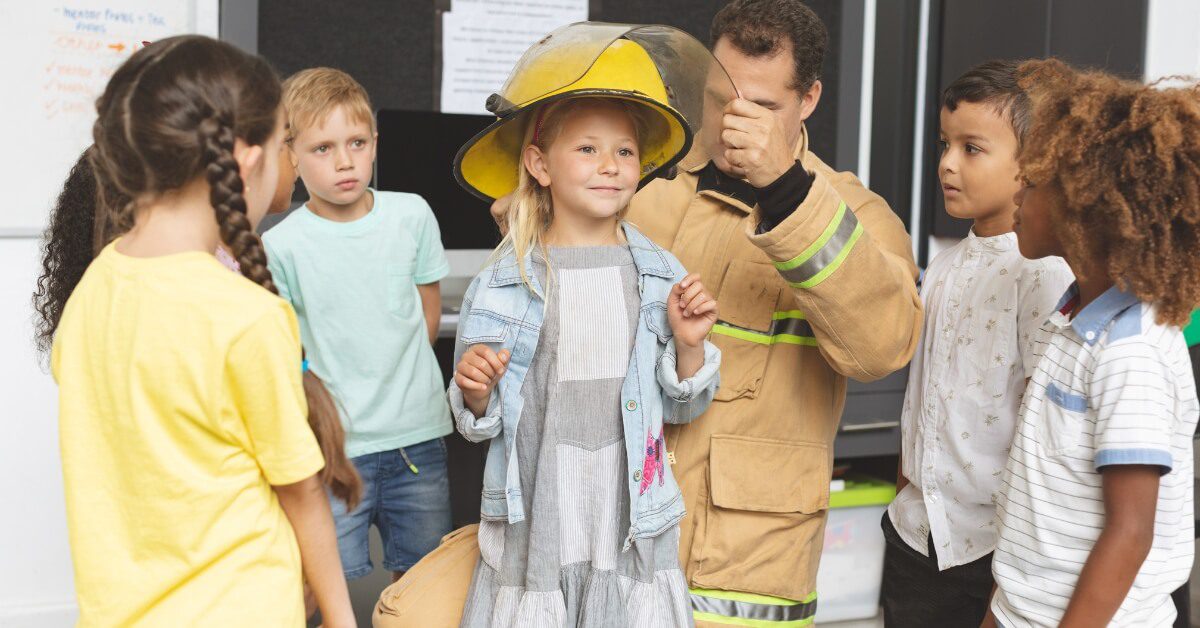
General Strategies on Supervising Activities with Children: Foundations for a Safe and Nurturing Environment
Now that we’ve embarked on our journey through the various stages of education, let’s take a moment to spotlight the backbone of a successful educational institution: its supervision strategies. Whether it’s in a bustling secondary school or a cosy nursery setting, the safety, well-being, and optimal learning of students rests on effective supervision. Let’s unravel the golden threads that stitch together a robust supervisory framework.
- Active Monitoring: This is Supervision 101. It’s about being present, alert, and proactive. Whether it’s the play area teeming with toddlers or the science lab where experiments unfold, educators need to be constantly tuned in. It’s not just about averting mishaps but also catching those teachable moments.
- Staff Training and Continuous Professional Development (CPD): The dynamic world of education is ever-evolving. Thus, regular staff training sessions become crucial. From the latest in educational pedagogies to understanding child psychology, CPD ensures that the educators themselves remain lifelong learners, ready to meet the diverse needs of their students.
- Partnership with Parents: Remember, it takes a village! Parents, or guardians, are intrinsic to the educational journey of a child. Regular parent-teacher meetings, feedback sessions, and open-door policies ensure a two-way dialogue. This collective approach paves the way for holistic development, where the school and home sing in harmony.
- Utilising Technology to Supervise Activities: The digital age offers a plethora of tools to supervise activities with children. From apps that monitor online activities to digital platforms for performance tracking, technology becomes a reliable ally. It’s about harnessing these tools judiciously, ensuring privacy while amplifying efficiency.
- Regular Risk Assessments and Updates: Complacency, when supervising activities with children, can be a silent nemesis. Regular risk assessments, be it of the physical infrastructure or the curriculum, are imperative. They identify potential hazards, ensuring that preventive measures are not just implemented but also updated in tandem with the changing environment.
In essence, effective supervision is akin to the soft yet sturdy mesh of a safety net, ensuring that while students soar high, they’re always shielded from undue harm. It’s the unsung lullaby that lets both students and parents sleep soundly, knowing they’re in safe hands.

Conclusion: Bringing It All Together
In our enlightening sojourn across the spectrum of education, one truth stands out, luminescent and undeniable: supervision, in its myriad forms, is the linchpin holding the vast edifice of learning together.
From the delicate days of infancy, where supervising activities is about meeting basic needs and ensuring the gentle hum of safety, to the adolescent years that dance on the cusp of adulthood, seeking guidance and understanding, the approach shifts. Yet, the essence remains — creating spaces where curiosity thrives, potential is unearthed, and dreams are nurtured.
It’s essential to appreciate that a ‘one-size-fits-all’ supervision model isn’t just inadequate; it’s counter-productive. Our journey through the distinct stages of the UK educational system underscored the importance of tailored, age-specific approaches. A toddler’s playground, buzzing with the joyous cacophony of exploration, requires a different supervisory touch than a sixth form classroom, echoing with debates and discussions on world-changing ideas.
Beyond the academic rigour, the heartbeats of these educational sanctuaries are their environments — spaces that are both safe and stimulating. In the UK, where the educational landscape is as diverse as its history is rich, creating this balanced ambiance becomes even more paramount. It’s about blending tradition with innovation, local wisdom with global perspectives, and above all, safety with freedom.
If you’re ignited by this call and are seeking opportunities to etch your mark in the educational realm, do explore the treasure trove of resources for jobseekers on our website. The next chapter of your journey could just be a click away!


