
In the UK today, less than 3% of the early years workforce is male. This statistic highlights one of the starkest gender imbalances across any profession. While women have made huge strides in traditionally male-dominated sectors, childcare and early education remain an area where stereotypes still hold firm.
Why does this matter? Because children deserve to see the world reflected in the people who care for and teach them. When only one gender is represented, we unintentionally send messages about who is – and isn’t – suited to nurturing, teaching, or leading in those vital first years of life. The absence of male role models also means missed opportunities for children to experience a broader range of interactions, play styles, and perspectives.
In this article, we want to explore the benefits of having more men in early years education, drawing on research, lived experiences, and the positive outcomes already being seen across the sector.
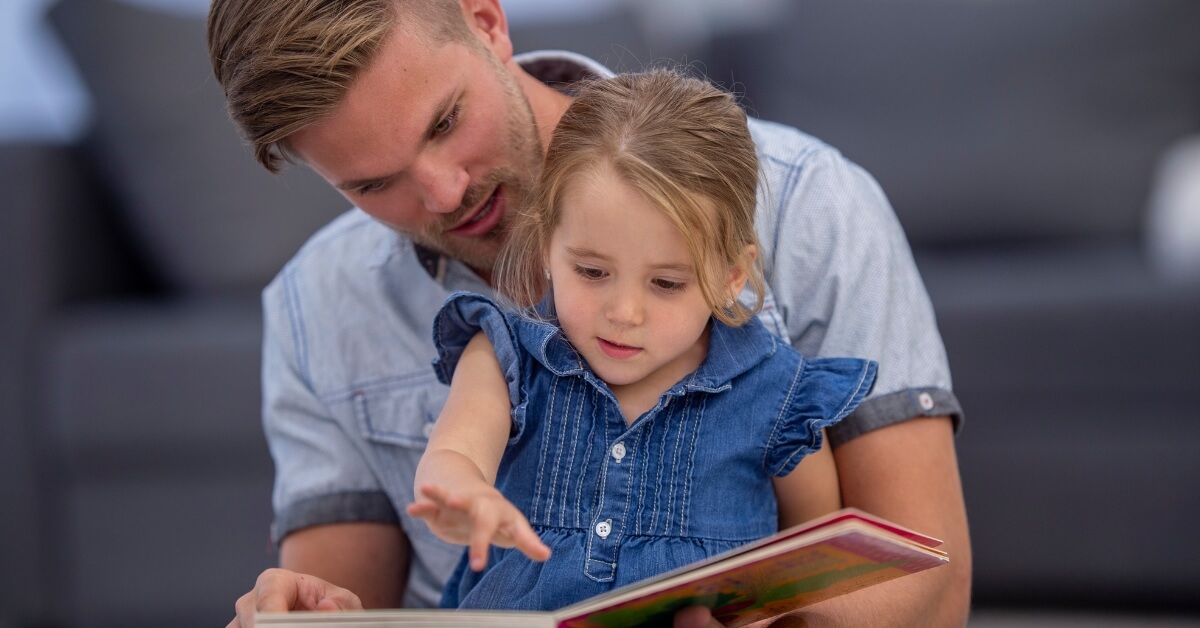
Children thrive when they are surrounded by diversity, not only in the resources and environments we create for them, but also in the people they interact with every day. Having both men and women in early years settings gives children access to a richer range of role models, which influences their social, emotional, and cognitive growth.
Research from the Education Endowment Foundation (EEF) consistently shows that children benefit when they see adults modelling different forms of care and leadership. Men who work in early years settings often bring an additional dimension to emotional literacy – demonstrating to boys and girls alike that it is perfectly natural for men to show warmth, comfort, and empathy. This challenges outdated ideas of masculinity and helps children develop more balanced expectations of the world around them.
Studies also highlight how exposure to gender diversity at a young age reduces rigid gender stereotypes. For example, research from the OECD suggests that children who interact with a broader range of role models are less likely to confine themselves to gendered career aspirations later in life.
There are also cognitive benefits. Research from Griffith University indicates that while men and women share similar levels of overall intelligence, they often differ in specific cognitive abilities due to how they have been socialised. Men tend to excel in spatial reasoning, while women often show strengths in verbal fluency and memory. These differences are not fixed, but when combined in a teaching workforce, they can fuel educational innovation. In practice, increasing male representation can introduce valuable spatial strengths – such as visualisation, problem–solving, and construction skills – which complement the verbal and memory-related strengths often observed in women. Together, these can be shared, reflected on, and developed across the team, enriching learning strategies for children.
The importance of this balance becomes clear when we look at wider trends. The Active Lives Children and Young People Survey (Sport England, 2022–23) reports a 22% gender gap in team sport participation, with 69% of boys aged 5–16 taking part compared to only 47% of girls. Similarly, research from Sylva Foundation (2023) highlights that only 20% of the UK woodworking industry is female, with just 8.5% of women working in manufacturing. These disparities reflect how activities linked to spatial reasoning and physical skill are still culturally associated with boys and men. Historically, as research from the Elon Journal of Undergraduate Research in Communications points out, outdoor education was designed to train boys in strength and determination while excluding girls.
By bringing more men into early years, we not only increase the likelihood of introducing valuable skillsets such as spatial reasoning and practical play, but also get the unique opportunity to challenge entrenched stereotypes by developing these activities across the whole team, so children see both men and women engaging in them.

We know from developmental research that children begin forming gender stereotypes as early as age two, with ideas becoming more rigid between three and five. These are the very years where early education plays a central role – which means our sector has a powerful opportunity to either reinforce or challenge those early assumptions.
When men are visible in early years classrooms and nurseries, children naturally expand their sense of what men “can” do. A male practitioner comforting a child, reading a story, or leading a creative activity shows that care and nurture are not qualities limited to women. This matters for both boys and girls: girls see that men can be gentle and supportive, while boys learn that expressing emotion and kindness is not only acceptable but celebrated.
Research by Cameron, Moss, and Owen (1999), published by the British Educational Research Association (BERA), found that male educators bring approaches to practice that are different but complementary. These are not “better” or “worse,” but they broaden the range of experiences available to children. Crucially, the study also showed that men’s very presence in caregiving roles challenges stereotypical assumptions about who can nurture young children, prompting both children and adults to rethink their expectations around gender.
More recently, research by Diversity Role Models (DRM, 2024) reinforced how powerful diverse role models can be. Their programmes, designed to embed empathy and inclusion, have been particularly impactful for SEND pupils, who reported stronger feelings of belonging and improved peer relationships after exposure to role models who shared lived experiences. While DRM’s work often focuses on LGBTQ+ inclusion, the broader principle applies directly here: when children see men in nurturing roles, it disrupts narrow ideas about who can care. This exposure not only reduces bullying but also fosters more inclusive attitudes across the whole school community.
There are also safeguarding implications. The Institute for Strategic Dialogue, in its report Misogynistic Pathways to Radicalisation, showed that rigid gender norms are often exploited by extremist ideologies. The Prevent duty guidance for England and Wales highlights the responsibility of educators to create safe spaces where children can learn to question harmful ideas and develop mutual respect. It reminds us that promoting “fundamental British values” – Democracy, Individual Liberty, Rule of Law, and Mutual Respect – applies to gender as much as religion or culture. By normalising male presence in early years education, we help challenge misogyny at its roots, showing children from the start that care and nurture are human qualities, not gendered ones.
The presence of men in early years therefore sends a much wider inclusivity message. It breaks away from the narrow societal mould where men are expected to be providers but not caregivers. By embedding men in these roles from the earliest stages, we not only model equality in the classroom but also contribute to a fairer and more inclusive society.
Early years is therefore not only about preparing children for school – it’s about shaping attitudes that can prevent inequality, exclusion, and even radicalisation later in life.

The benefits of having more men in early years settings are not limited to children – they extend to families too. Fathers, in particular, often feel more confident engaging with nurseries and schools when they see male staff as part of the team. It creates an unspoken message that their presence and input are valued, not secondary to the mother’s role.
Research has shown that father involvement improves children’s educational outcomes, emotional wellbeing, and long-term confidence. When early years settings make space for fathers, everyone benefits. Having men on staff can make it easier to start conversations with dads who might otherwise hold back, unsure of their role in their child’s learning journey.
Research supported by the Fatherhood Institute has also found that the presence of male practitioners encourages greater involvement from fathers, who feel more comfortable participating in activities and communicating with staff when men are present. This enhanced father engagement not only benefits children but also strengthens the wider family network.
This knock-on effect leads to stronger family–school partnerships. When dads feel welcomed, they are more likely to participate in activities, share ideas, and support learning at home. In turn, this builds a community where both parents are recognised as essential to a child’s development.
Diversity in the workforce is not only good for children – it’s good for staff too. Mixed-gender teams bring a balance of perspectives that enriches everyday practice. Different approaches to problem-solving mean staff can draw on a wider range of skills and experiences, which leads to stronger teamwork and more creative solutions to challenges.
Research across multiple sectors – including education – demonstrates that diverse teams are more innovative, retain staff longer, and foster greater inclusivity.
Together, these findings underline that diversity is not just a moral imperative – it is also a practical driver of innovation, staff wellbeing, and long-term organisational success.
In early years, where recruitment and retention are pressing concerns, these benefits are significant. A culture that values gender balance sends a signal that all staff are supported, reducing burnout and improving morale.
Ultimately, a more gender-diverse workforce supports not only children’s experiences but also the wellbeing of the adults who care for them. Everyone benefits when teams reflect a mix of perspectives and strengths.

The early years sector is facing a well-documented recruitment and retention crisis, with many providers struggling to fill vacancies and keep experienced staff. At a time when the workforce is under such pressure, it makes little sense to overlook half the population. Encouraging more men into early years roles expands the talent pool and brings in valuable transferable skills from other industries.
We’ve seen countless examples of men making successful career changes into early years. From former members of the armed forces to chefs and retail managers, they have all transitioned into the sector, bringing with them discipline, people skills, and practical knowledge that enrich practice and inspire colleagues.
Importantly, Gartner research quoted on UNC Pembroke suggests that gender-diverse teams improve retention across the board. When men and women work together in supportive, inclusive environments, staff are more likely to feel valued and stay in the profession. Attracting more men into early years is therefore not just about fairness – it’s a practical strategy to strengthen and sustain the workforce.

The impact of having more men in early years goes far beyond the nursery gates. When men are visible in care and education roles, it helps to shift cultural attitudes about gender and work. Children grow up seeing care as a shared human responsibility, not something defined by stereotypes.
This has a ripple effect across society. Greater gender balance in early years not only contributes to equality in professions such as teaching, nursing, and social care, but also lays the groundwork for change in traditionally male-dominated industries. Many sectors remain unbalanced because previous generations were not exposed to mixed role models in their formative years and grew up with limited views of what men and women could do. By normalising gender diversity in early education today, we can break that cycle for the future.
In practice, this means that boys and girls who see both men and women teaching, caring, building, and leading are more likely to carry inclusive attitudes into adulthood – whether they enter engineering, healthcare, or any other profession. Male practitioners, therefore, become role models not only in their settings but also in their communities, helping to normalise equality for future generations.

Bringing more men into early years education is not about men versus women – it is about giving children the best possible start in life. A gender-diverse workforce enriches learning, challenges stereotypes, engages fathers, strengthens teams, and helps address the recruitment crisis facing our sector. The benefits are clear, both for children and for society.
Now is the time to act. We need to invest in recruitment strategies, shape inclusive policies, and build a culture where men and women feel equally welcome in early years roles. When we achieve this, it is the children who gain the most.

